In celebration of America's 250th anniversary, the U.S. Botanic Garden is showcasing the flowers each U.S. state and territory has chosen as their official flower. The April-October 2026 exhibit shares their sights and stories with living plants, artistic displays, botanical illustrations, and herbarium specimens.

From fragrant magnolia flowers and roses to native orchids, bluebonnets, and saguaro cactus flowers, enjoy the variety as we feature the floral beauty that symbolizes America.

See the full list on our America's State Flowers webpage, and continue reading to learn more as we showcase each official flower.

Hawaii | Idaho | Illinois, New Jersey, Rhode Island & Wisconsin
HAWAII

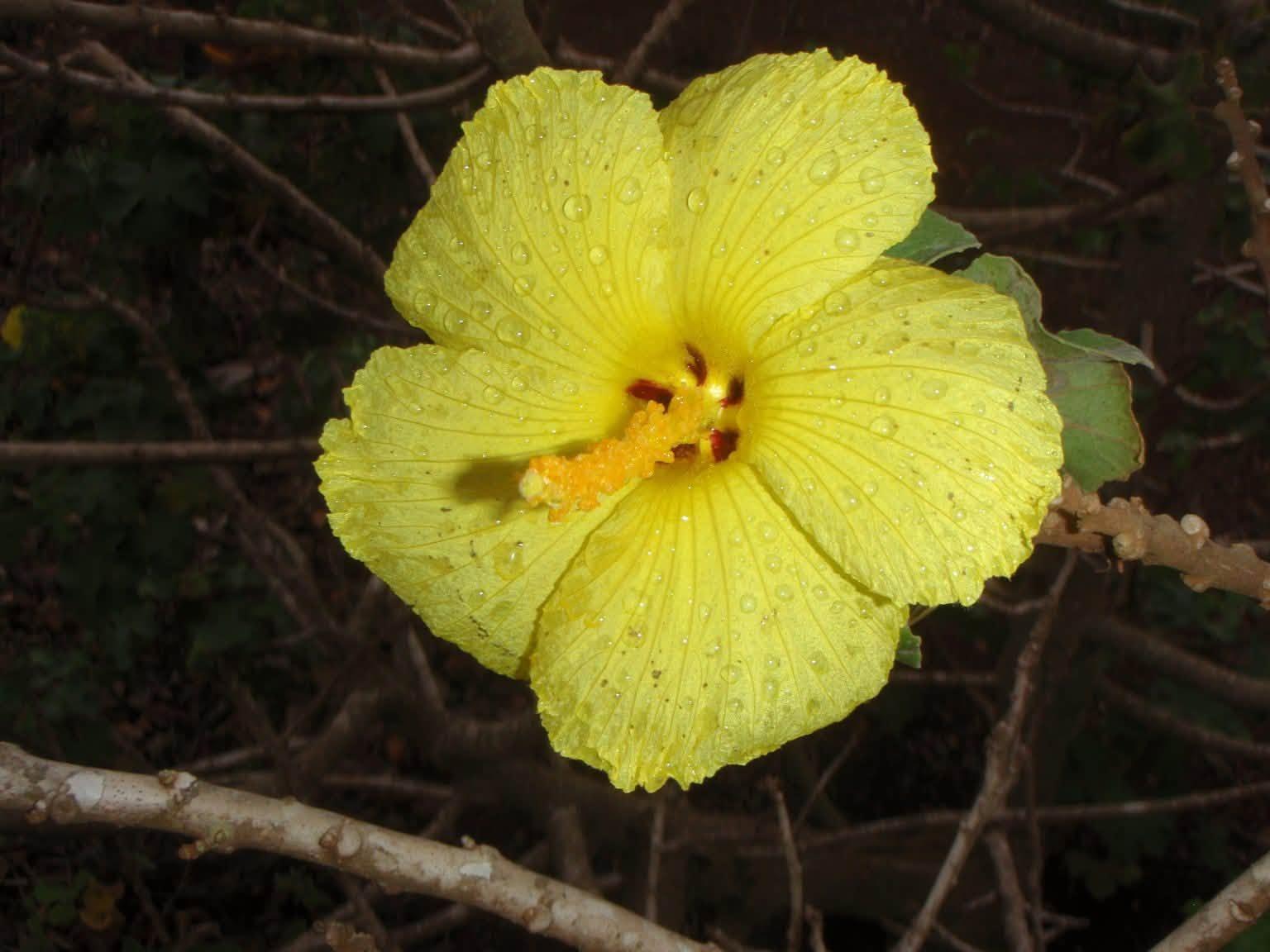
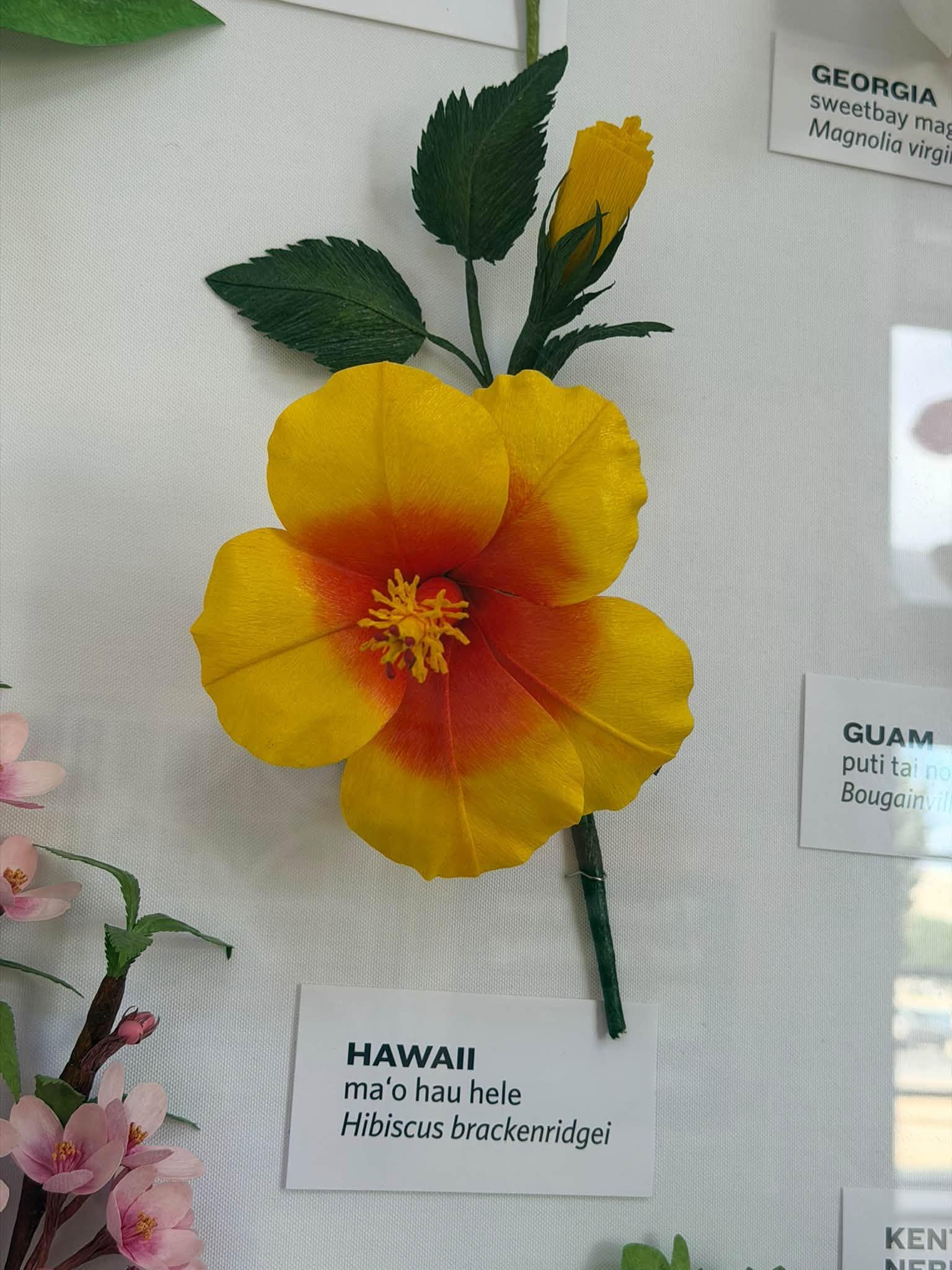
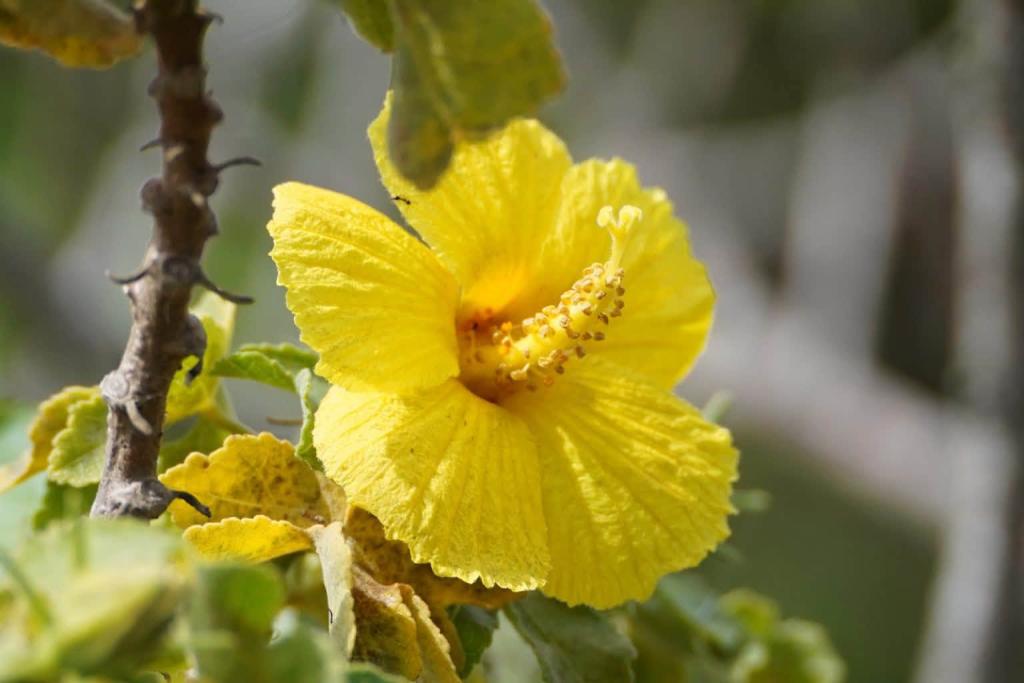
Ma‘o hau hele (Hibiscus brackenridgei)

yellow flower

This bright, clear yellow hibiscus is endemic to Hawaii and is listed both federally and state endangered. It grows in dry forests and shrub lands, which might seem to be a contrast with wet forests sometime thought of for Hawaii, but the islands have a wide variety of habitats. The flowers are 4-6 inches across and the plant can grow up to 10 feet tall.

[Photos by Hawaii State Department of Natural Resources.]

Bloom time: February - May
 

IDAHO

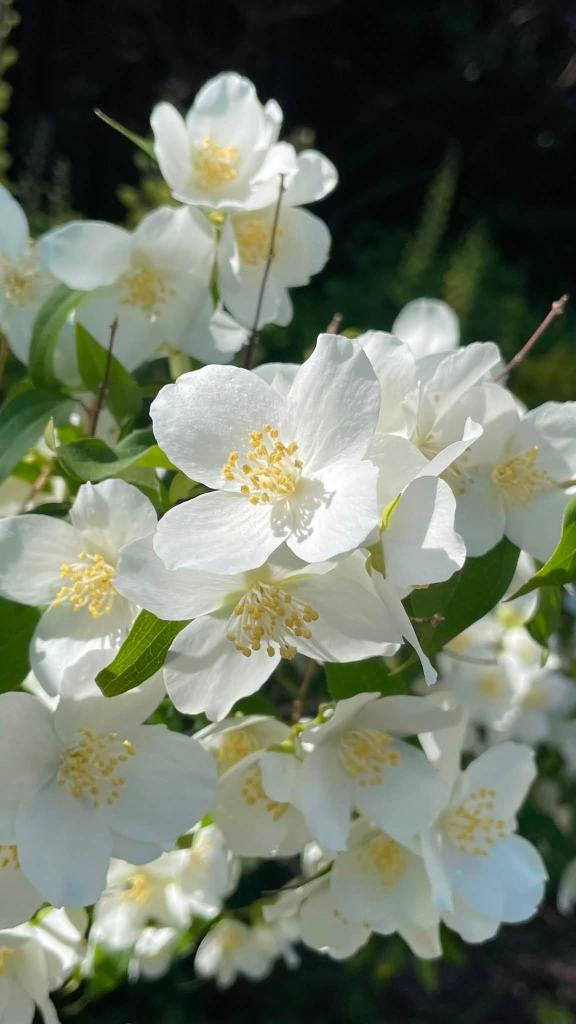
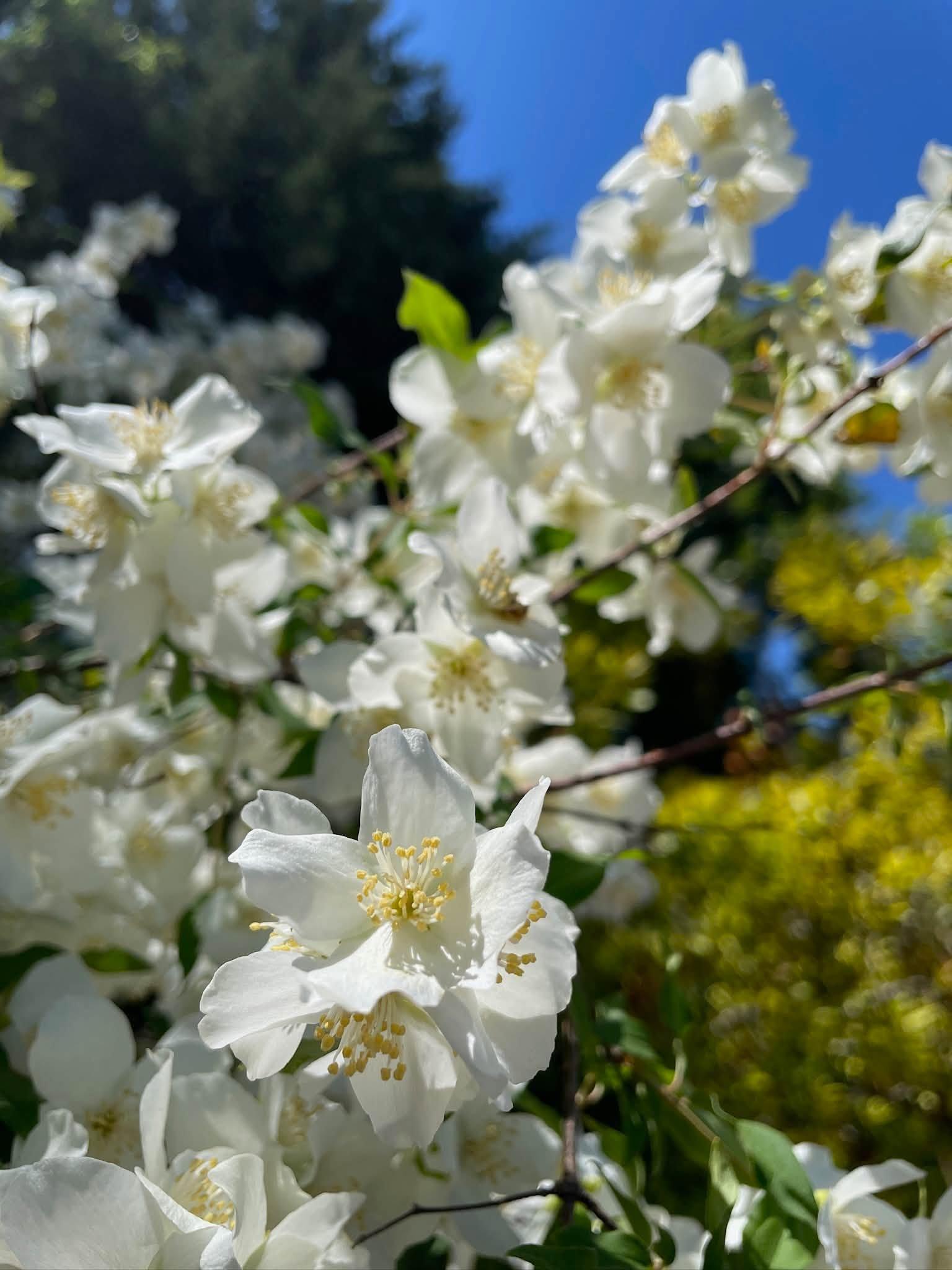
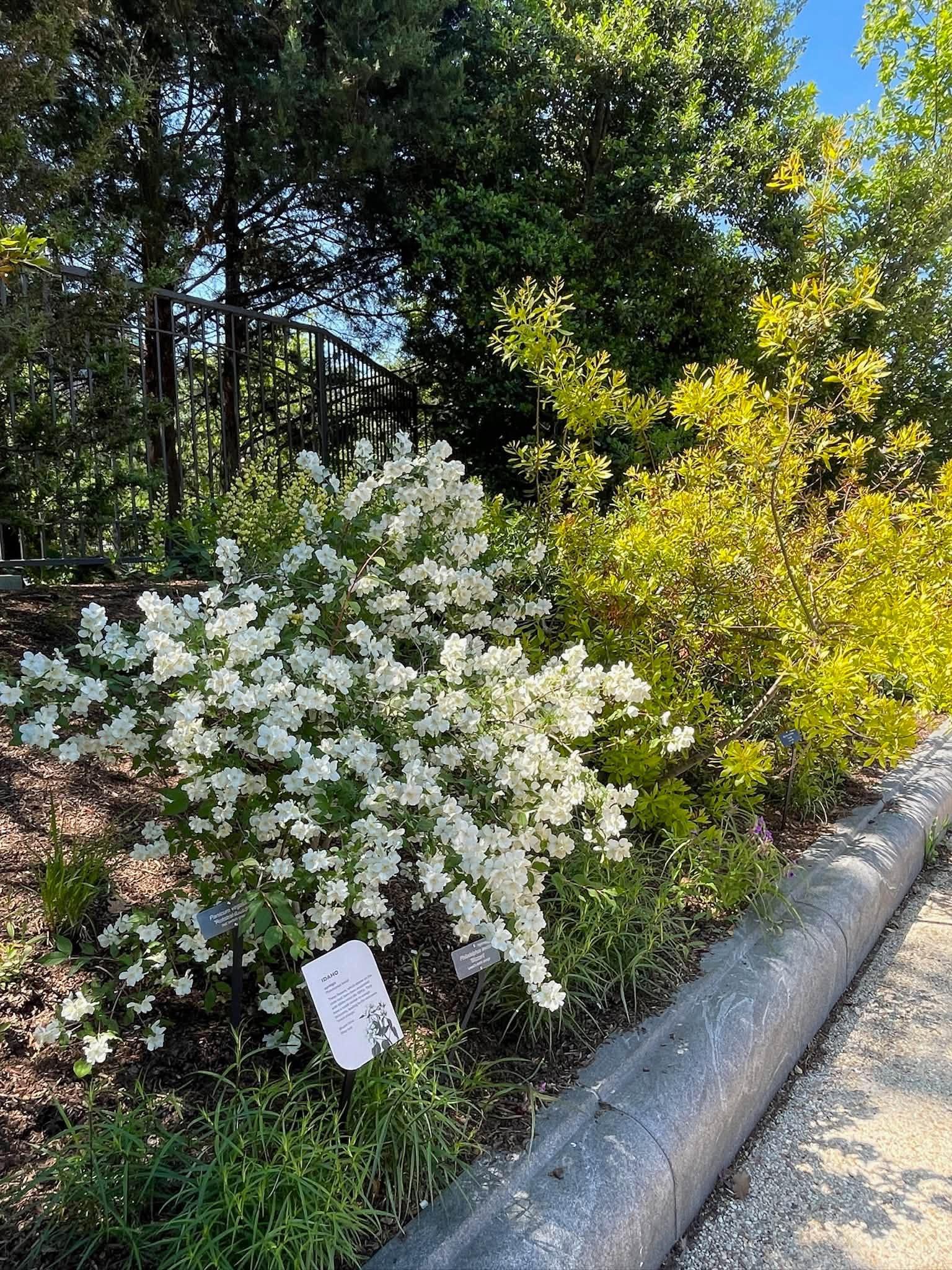
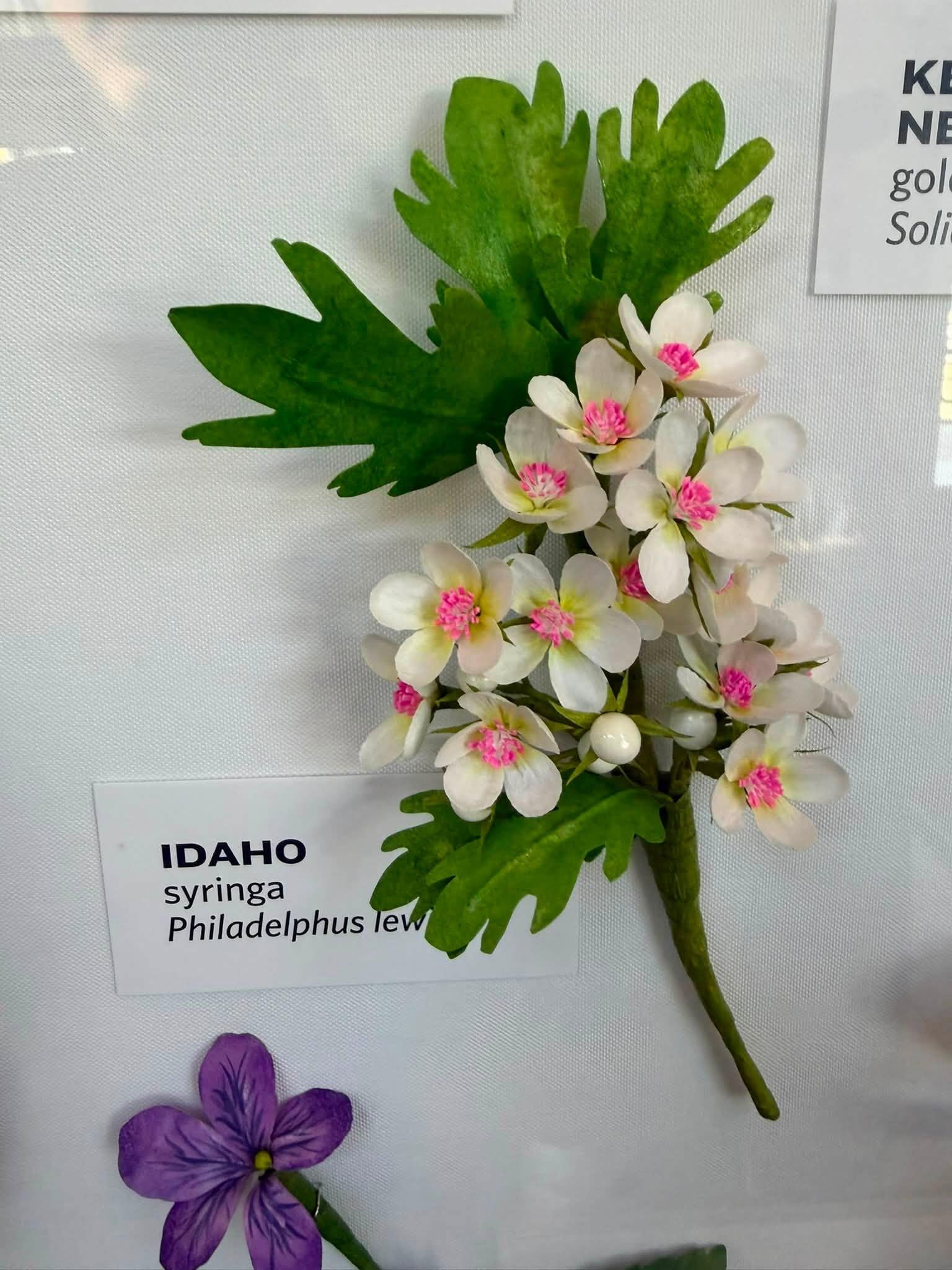
Syringa (Philadelphus lewisii)

white blossoms up close

These flowers, which appear on the state seal, have been associated with Idaho since the 1890s. They have a scent similar to orange blossoms, leading to the nickname "mock orange."

Bloom time: May-July

ILLINOIS, NEW JERSEY, RHODE ISLAND, & WISCONSIN

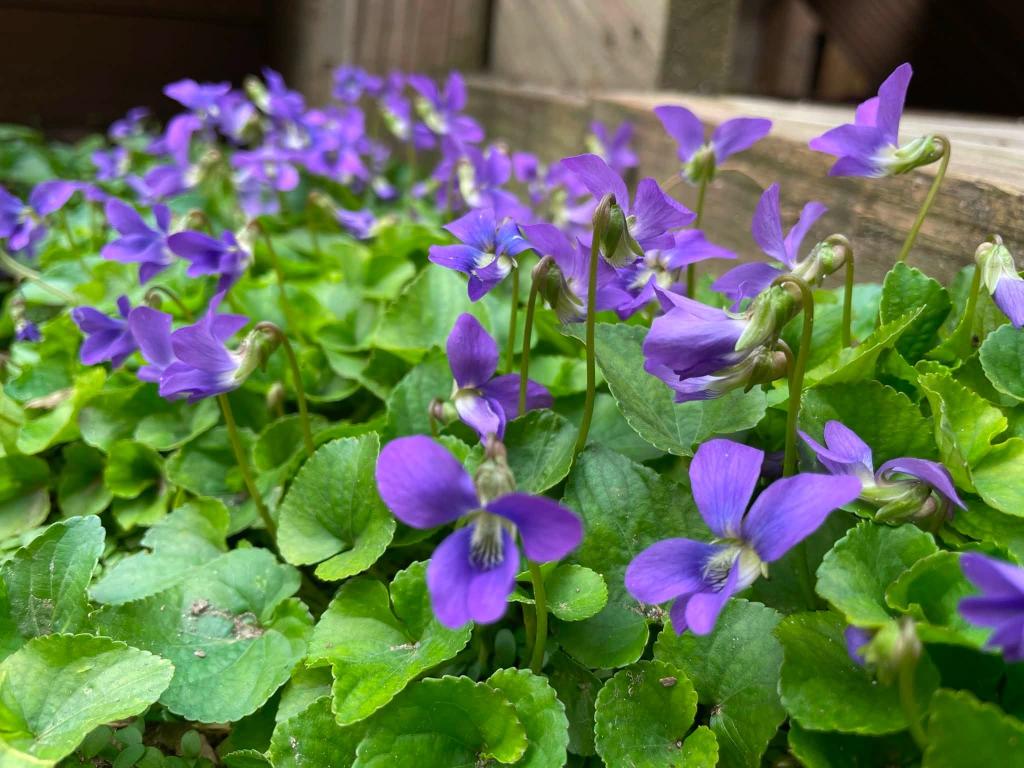
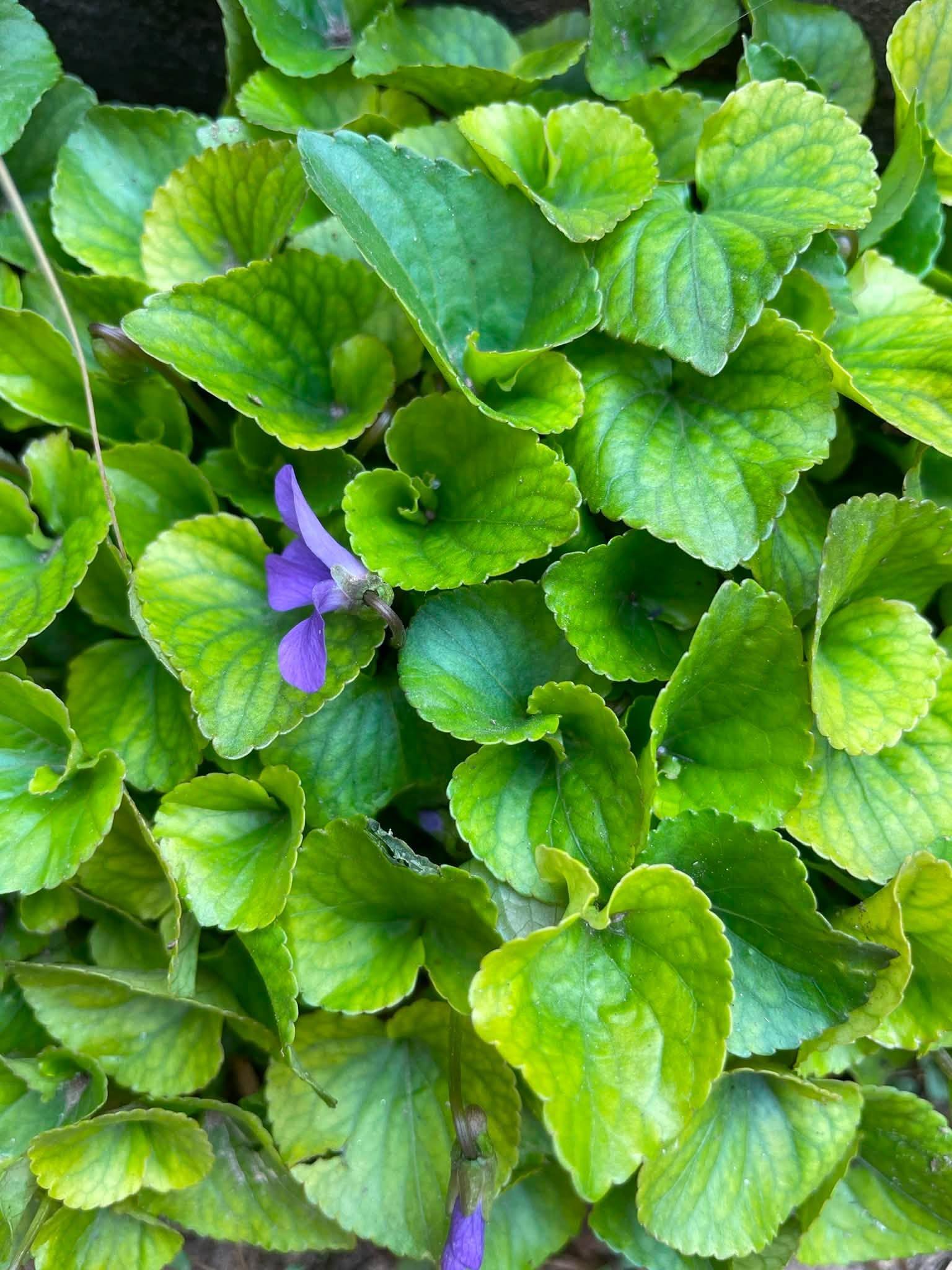
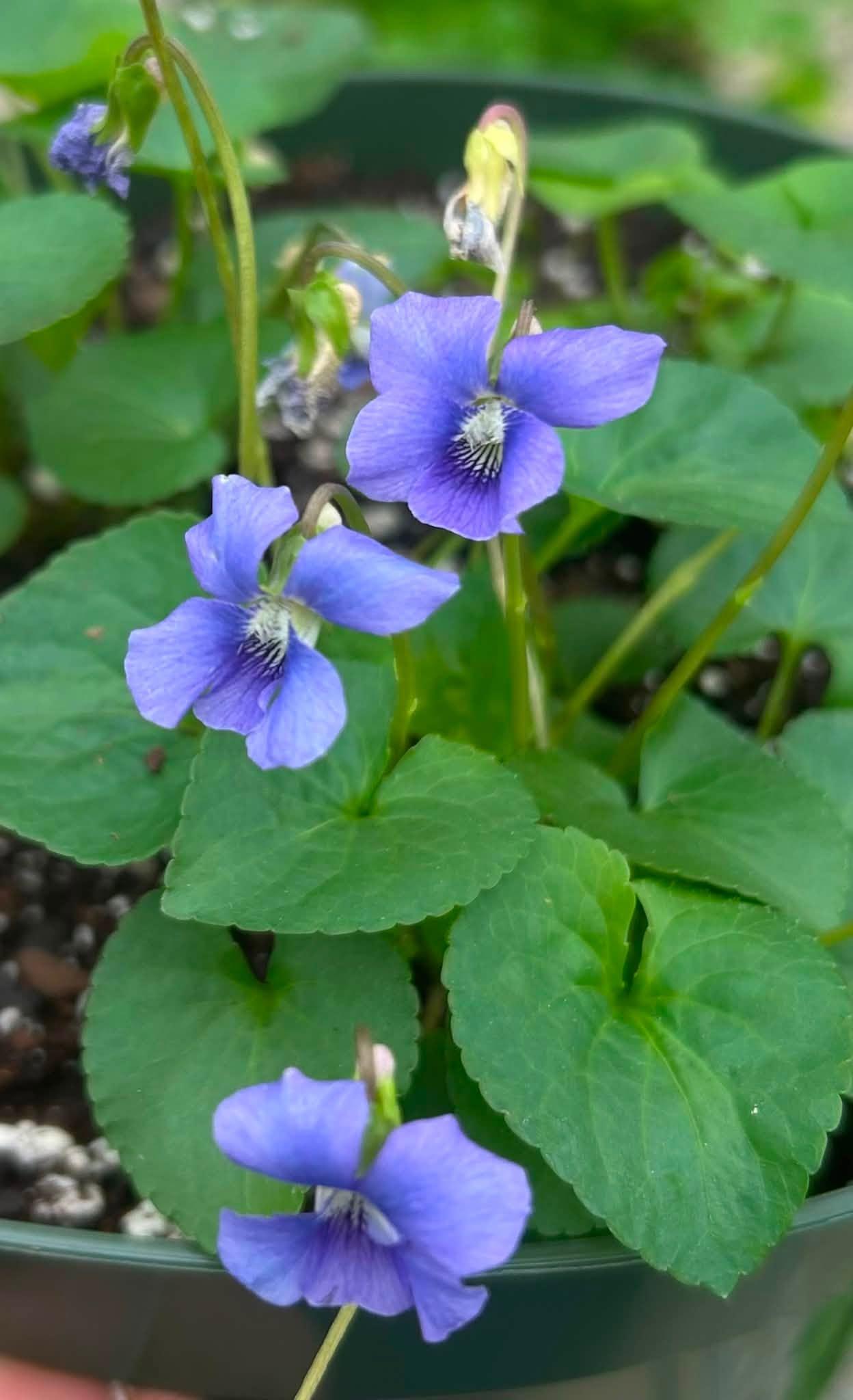
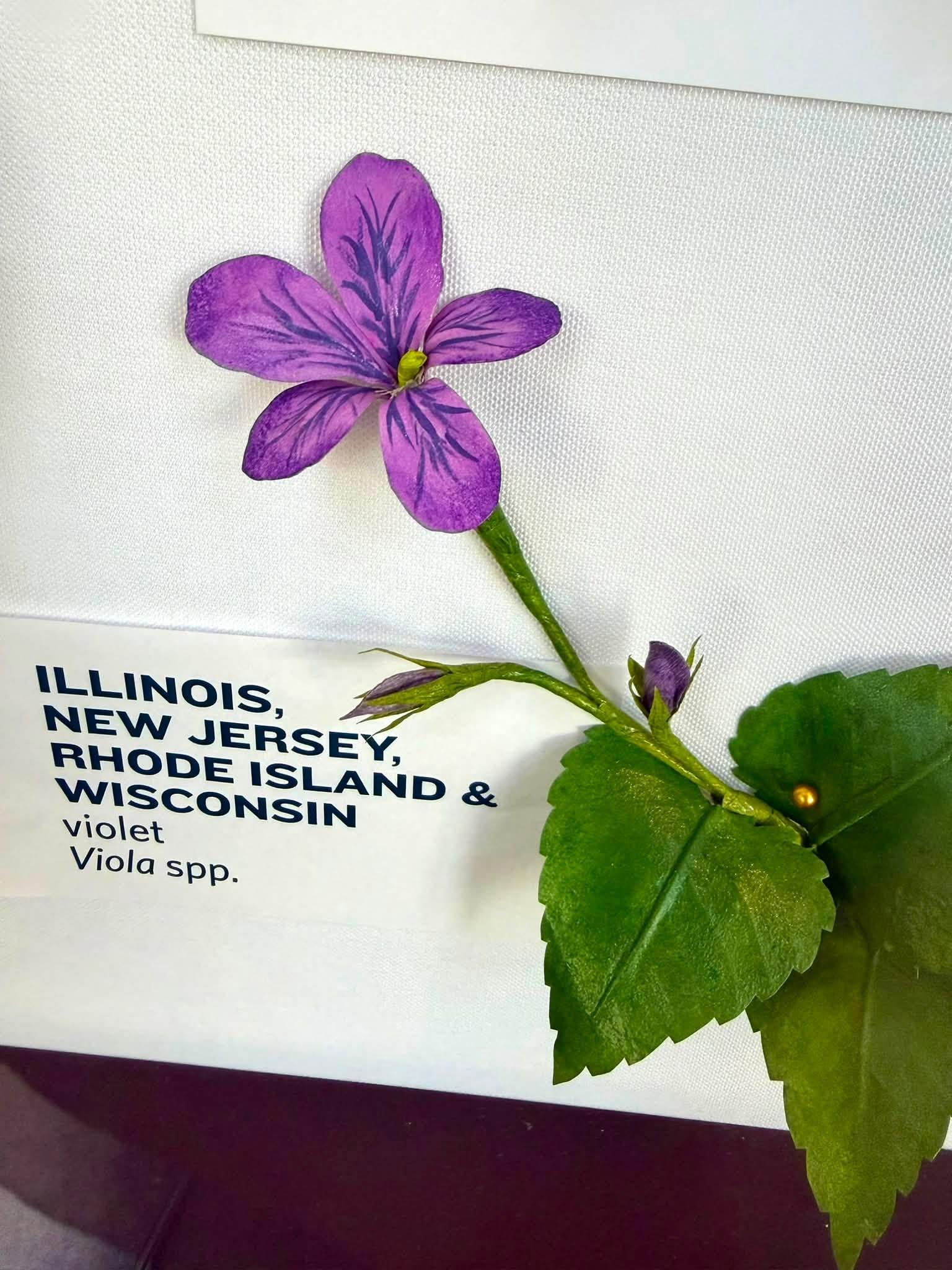
Violet (Viola spp.)

purple flowers

Four states named the violet (Viola spp.) as their state flower!

The 1893 Chicago World’s Fair had a Women’s Congress that suggested each state should have a state floral emblem, leading to a rush for many states choosing state flowers over the following years.

Wood violet leaves are high in vitamins A and C, while the flowers can flavor candy or jellies or even be candied themselves as edible decorations on cakes and such.

The first state to choose the violet their state flower was Rhode Island in 1897, with schoolchildren voting it in on Arbor Day, though legislation wasn't passed officially naming it until 1968 — one of the last states to officially legislate their state flower despite it being chosen 71 years earlier. Its challengers included the rose, pansy, goldenrod, daisy, buttercup, and more.

In Illinois in 1907, schoolchildren also voted in the violet over the wild rose (and became the first to officially legislate it), and in Wisconsin in 1909 (legislated officially in 1949), schoolchildren chose it over the wild rose, trailing arbutus, and the white waterlily.

New Jersey officially named it in legislation in 1971, though it had been considered the unofficial state flower since 1913.

Bloom time: March-June


This is part three of an eight-article blog series. Keep checking usbg.gov/blog to explore the rest of this series, and stop by the Garden to see the exhibit in person before it closes October 12, 2026!