
At the U.S. Botanic Garden, we strive to make our collection, programming, and facilities accessible to ensure a successful museum visit for all visitors. Please see information below or stop at our Conservatory lobby where staff and volunteers can provide information and updates.
For help with access issues, please contact us at USBGaccessibility@aoc.gov.
Jump to: Getting to the Garden | Mobility Resources | Autism & Sensory Resources | Deaf/Hearing Resources | Additional Resources | Programs
Getting to the Garden
Public Transit
We recommend taking public transit (WMATA/“the metro” trains and busses) to the Garden. Transit routes that serve the Garden are listed on our Hours & Location page, and you can use the WMATA Trip Planner to find direct transit options.
Paratransit
Paratransit drivers can be instructed to drop off passengers on Maryland Avenue in front of the accessible paths. Visitors to the Washington, DC metropolitan area who are unable to use the accessible rail, bus or other public transit service because of their disabilities can apply for a visitor MetroAccess Paratransit pass to use for up to 21 days.
Parking / Drop-off
The Garden does not have a dedicated parking lot for visitors. Eight (8) city paid accessible single space meters (“red top meters”) are located within two blocks of the USBG. You can find these accessible paid parking locations and rate details on ParkDC's Parking Meter Map. Accessible spaces are marked with a red icon on the map, and you can click on the icon for more details.
Visitors using ride share or taxis can be dropped off on Maryland Avenue in front of the accessible paths.
Resources for Visitors with Mobility Disabilities
Wheelchairs
Wheelchairs are available to borrow on a first-come, first-serve basis, including a bariatric wheelchair for those who need or prefer a wider seat. To borrow a wheelchair, talk to a member of our Visitor Services team in the Conservatory lobby and provide a valid driver's license or government-issued photo identification card. The photo ID will be stored while you use the wheelchair and will be given back to you upon return of the wheelchair. A USBG-borrowed wheelchair can only be used on U.S. Botanic Garden grounds and should not be taken offsite.
Accessible Pathways
Step-free access routes are marked throughout the Conservatory and outdoor gardens and can also be found on our Visitor Guide map. The Conservatory also features automatic doors between most plant houses. For more information about accessible routes through the Garden, please inquire in the Conservatory lobby upon arrival.
Note that some areas of the Garden include varied path materials, water features, and automatic water misters that can cause puddles or slippery areas on pathways, including:
- Garden Court
- Tropics (wood bridge)
- Canopy Walk (metal grating)
- Hawaii
- Primeval Garden
- Orchids (wood pathway)
- Area surrounding the Bartholdi Fountain
Elevators
The Canopy Walk can be accessed using an elevator located in the northeast corner of the Tropics and is marked on the Visitor Guide map.
Other Power-Driven Mobility Devices
The U.S. Botanic Garden accommodates the use of some Other Power-Driven Mobility Devices (OPDMDs), which are electric devices designed primarily for use by individuals with mobility limitations. To maintain a safe and pedestrian-friendly environment, operating a mobility device at a speed greater than the flow of the surrounding pedestrian traffic is prohibited. Permitted mobility devices include electric OPDMDs and other single-seat electric scooters with three or more wheels that cannot exceed 6 miles per hour and Segways and similar with a steering handle operating only in “turtle” mode.
Resources for visitors on the autism spectrum or with sensory sensitivities
Sensory Bags & Resources
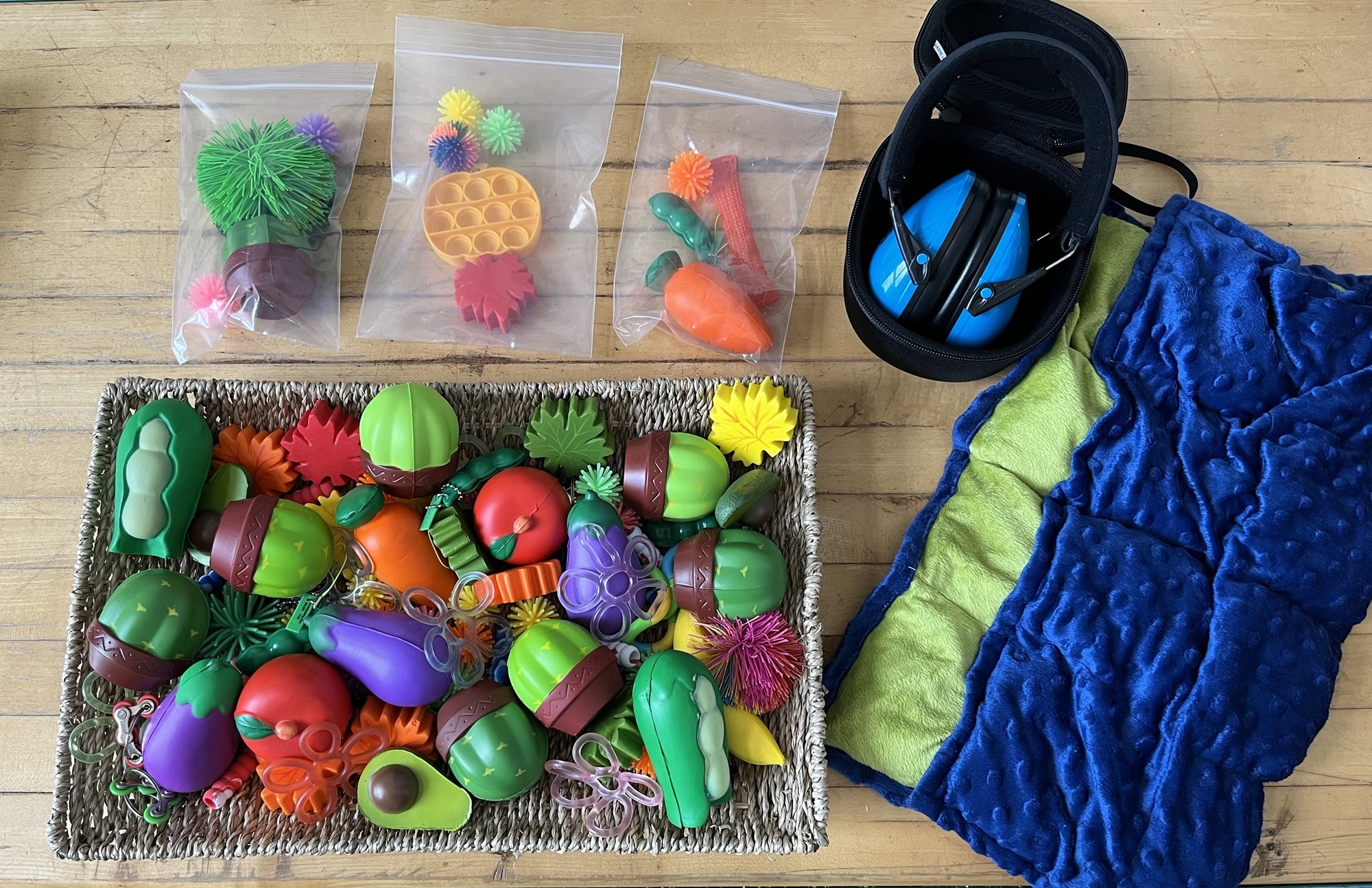
You can borrow a Sensory Bag from Visitor Services staff at the Conservatory lobby with a valid driver's license or government-issued photo identification card. The ID will be given back to you upon return of the sensory bag.
Sensory bag contents include noise-reducing headphones, weighted lap blankets, and a selection of fidgets to help ease sensory stimulation.
- Our sensory tip sheet gives an overview of the areas of the indoor Conservatory that may impact visitors with sensory sensitivities.
- Virtual Tours offer a chance to preview a typical experience in the Conservatory Tropics, Bartholdi Fountain and Gardens, and outdoor gardens.
If you are looking for a quieter time to visit, the months of January through early March and mid-July through early September tend to be the least crowded. Tuesdays and Wednesdays are typically the least busy days and afternoon times also tend to have fewer visitors.
We also offer Sensory-Friendly events on a regular basis which provide access to the Garden outside of public hours designed for people with sensory sensitivities. You can see more details at Access Events and Program Resources.
Resources for visitors who are d/Deaf or hard of hearing
Transcription (Online programs)
Real-time speech-to-text transcription is available for all online programming. This service provides captions in a separate browser window.
Sign Language Interpretation
We offer sign language interpretation upon request, in cooperation with the Office of Congressional Accessibility Services. Schedule an interpreter by emailing USBGaccessibility@aoc.gov with your name, planned visit date, and any details (such as if you are attending for a program, special exhibit, or with a group of people). If possible, please allow at least five business days’ advance notice to schedule an interpreter.
Additional Resources and Policies
Audio Tours
The Garden’s audio tour is available in both English and Spanish by calling (202) 730-9303 or visiting usbg.oncell.com on a mobile device. Transcripts of all tour stops are also available on the mobile website.
Seating
Benches with backs and armrests are located throughout the indoor Conservatory to take a break from your visit (including in the air-conditioned East and West Galleries). Tables, chairs, and benches are located throughout the outdoor gardens.
Breastfeeding & Lactation
Breastfeeding is welcome in all areas of the Garden. There are no private breastfeeding lounges or lactation stations for electronic pumping. Refrigeration or heating of expressed milk or formula is not available.
Color Vision Deficiency Glasses
We offer color-enhancing glasses to borrow. To borrow a pair, talk to a member of our Visitor Services team in the Conservatory lobby and provide a valid driver's license or government-issued photo identification card. The photo ID will be stored while you use the glasses and will be given back to you upon their return.
These glasses are designed to enhance color vision for people with common forms of red-green color vision deficiency. Glasses are available with indoor lenses that work for people with deuteranomaly and protanomaly, and glasses with outdoor lenses are designed for people with deuteranomaly. Youth sizes and designs that fit over prescription glasses are also available.
Restrooms and Changing Tables
All restrooms offer two accessible stalls and infant-size changing tables. Restrooms also include automatic faucets, toilets, soap dispensers, and high-velocity hand dryers. Stepstools are provided in each restroom.
Service Animals
We welcome service animals that are trained to work or perform tasks for an individual with a disability in all areas of the Garden. Visitors with dogs may be asked to leave if their dog poses a direct threat to others, is not housebroken, or is not under their control.
Leashed pets are allowed in the outdoor gardens.
Touch Policy
We encourage visitors to “look with their eyes” and not touch plants on purpose because this may damage the plant over time. There is also a small risk that you might be allergic to a plant and not know it.
Visitor Guides
The Garden's Map and Visitor Guide is available in 10 languages, Braille, and large print and may be picked up in the Conservatory lobby or downloaded as a PDF.

Access Events and Specialized Programs
Have questions or want more information about specialized programs and program resources? Contact us at USBGaccessibility@aoc.gov.
Morning at the Garden and Evening at the Garden (Sensory-Friendly)
Sensory-friendly events at the USBG are designed for anyone who has sensory issues or any disability that makes it difficult to enjoy the garden during regular public hours. Family members, caregivers, and companions are welcome. These events are held during mornings or evenings outside of public hours and typically include:
- Reduced noise, light, and sound levels
- A dedicated take-a-break space
- Sensory resources available to borrow, including noise-reducing headphones, weighted lap blankets, and a selection of fidgets
- Activities that connect to current exhibits or seasonal themes
Upcoming events are listed on the USBG Programs and Events Calendar and can be found by selecting “Sensory Friendly Hours” from the Event Type drop-down menu or looking for events marked with a bright purple dot on the calendar list.