
Cultivating Young Leaders: A Workbook for Growing A Youth-Led Cooperative Garden Business
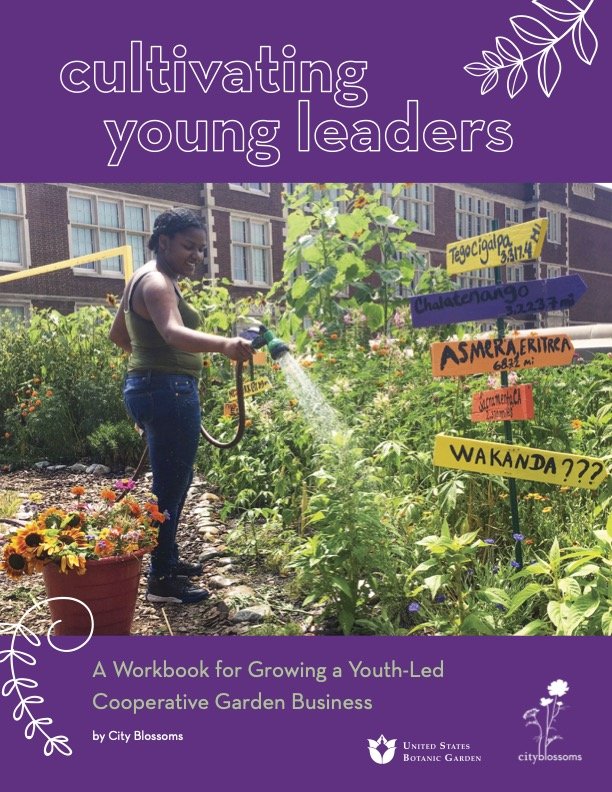 This innovative resource, created in partnership with City Blossoms, is informed by the work of their Youth Entrepreneurship Cooperative (YEC) program. It is complete with templates and tools to support anyone interested in connecting high school youth with gardens and entrepreneurship skill-building.
WHAT YOU WILL FIND INSIDE:
This workbook includes in-depth insights from City Blossoms staff, who have committed more than seven years to growing the YEC program. This resource gives insight into City Blossoms’ philosophy for:
- recruiting participants;
- forming local partnerships;
- designing a safe and inviting meeting space;
- and launching a youth-led cooperative business.
This workbook is filled with guiding questions to assist others in developing their own unique adaptation of this program.
Click through to download your free digital copy from the City Blossoms website!